


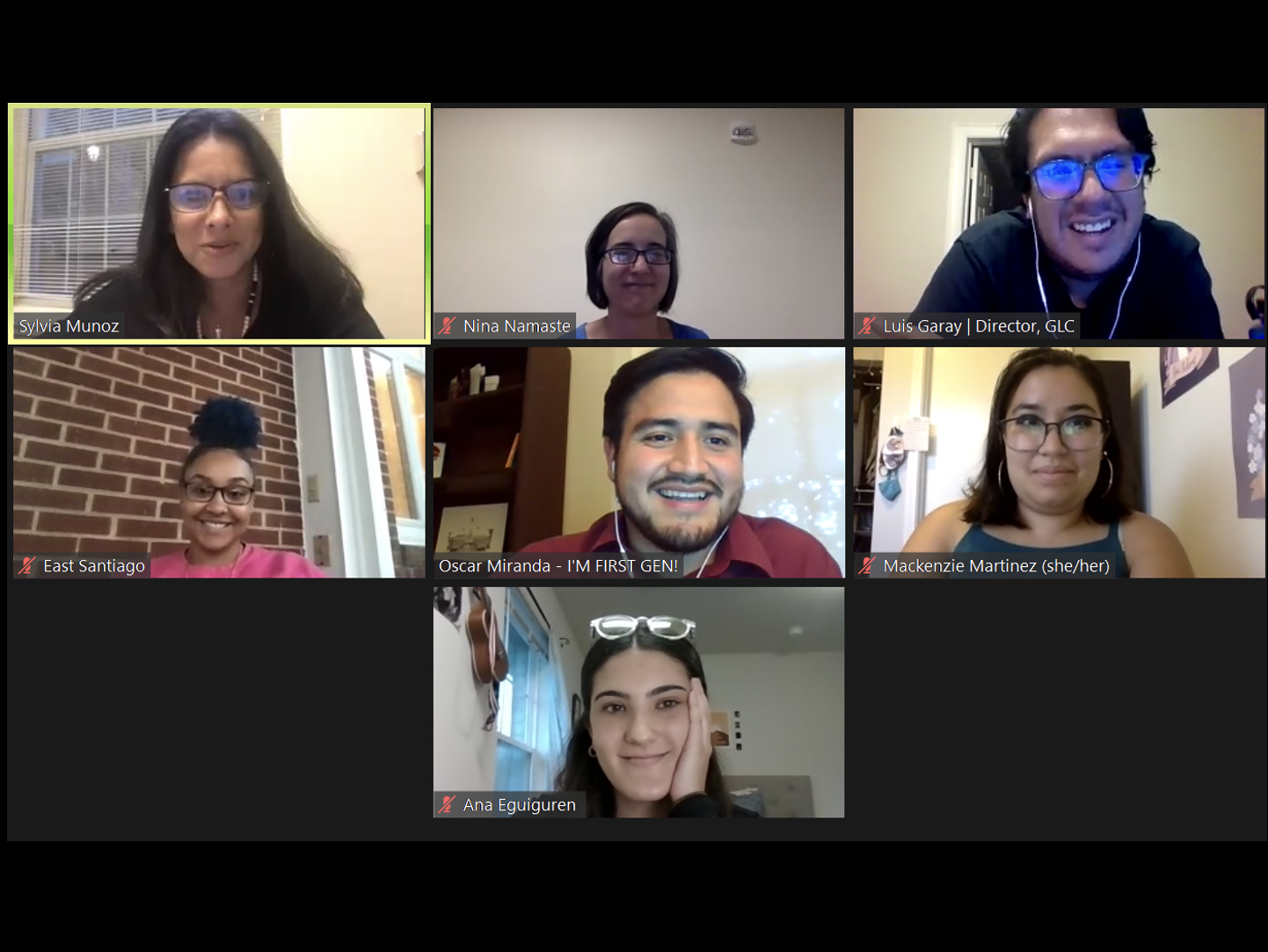
During the online discussion on Wednesday, Sept. 30, panelists highlighted what it means to be Latinx/Hispanic and the intricacies of those identities
As part of Hispanic Heritage Month, students, faculty and staff spoke on a panel on the complexities of Latinx/Hispanic identity moderated by Assistant Director of Access and Student Support Oscar Miranda on Wednesday Sept. 30.
Latinx/Hispanic individuals name their identities in different ways, Miranda said. Terms like Latinx, Latino, Latina, Hispanic, using their country of origin or using 鈥淎merican鈥� are different preferences.
鈥淚t鈥檚 important to know Latinx and Hispanic people are not a monolithic culture. We come from different backgrounds, in all shapes and sizes, complexions and with a multitude of other identities,鈥� Miranda said.
Mackenzie Martinez 鈥�21, who spoke on the panel, said she identifies as 鈥淐hicana.鈥�
鈥淭o me, identifying yourself is something really important, that’s a way that you claim your history, you claim your identity and your ancestry,鈥� Martinez said. 鈥淪o for me, finding the right word was really, really important.鈥�
Martinez chose 鈥淐hicana鈥� after learning about the Chicano movement in the 1960s which advocated for social justice for Mexican-Americans. Martinez鈥檚 family is from Mexico and she is the third generation to be born in the U.S.
鈥淚 really loved that kind of social justice, like taking power back that that movement represented and it also really links to this Mexican American-ness that has very much identified my Latinx experience,鈥� Martinez said.
Ana Eguiguren 鈥�21, who is from Ecuador, never questioned her identity before coming to college and still finds it challenging to identify herself.
鈥淟atino is not a race despite it being checked in as a race, and it’s not an ethnicity altogether because ethnicity implies a cultural background, and we all have very different cultural backgrounds,鈥� she said. 鈥淓ven inside of Ecuador, there are so many different cultures and languages so it’s been such a quest for me to try to identify myself and often I think about like, am I trying to put myself in a bigger box, just so that others understand me better?鈥�
East Santiago 鈥�23 takes on the term “Latinx,” but when people ask her where she is from, she says she is Puerto Rican. Santiago points out another aspect that makes this identity complex: like many Hispanic/Latinx people, she doesn鈥檛 know entirely 鈥渨hat鈥� she is as many are ethnically mixed. 鈥淧uerto Rican is white, black, everything,鈥� she said.
Associate Professor of Spanish Nina Namaste never wanted a term to identify herself. Her parents are from Catalonia, an autonomous region in Spain, and they fled to the U.S. to escape a Spanish dictatorship. Namaste said she grew up in a privileged household where her parents were 鈥渆xplicit and intentional鈥� that her family could choose what aspects of Spanish and American culture they wanted to adopt.
鈥淢y parents taught us multiple languages, all these kinds of things to allow us choice and we were very much encouraged to be different, that it was OK to be different,鈥� she said.
Namaste said she never identified with any particular term and she dislikes the term 鈥淗ispanic鈥� because of its association with colonialism. She said terms of identifications felt constraining.
鈥淭he terms always seemed limiting to me because I always wanted it to be in this space that was in between, because the space in between allowed choice,鈥� Namaste said.
The discussion shifted to spaces at Elon where Latinx/Hispanic students, faculty and staff can feel connected to each other. Eguiguren said that the presence of El Centro, where Latinx/Hispanic students often hang out, was a factor in her deciding to attend Elon.
鈥淚 honestly felt like I had like this tiny family where I could rely on even if I didn’t know them that well,鈥� she said.
Director of the Gender and LGBTQIA Center Luis Garay said these spaces are particularly important at this moment where he said he is in a 鈥渟tate of despair.鈥�
鈥淭here are not that many of us but the fact that a place like El Centro is here, CREDE鈥檚 here, Irazu鈥檚 here, that鈥檚 really special,鈥� Garay said. 鈥淪o I don鈥檛 want to take away from the not good parts of what it means to be Latinx at Elon, but in these times of such despair, centering joy is supercritical.鈥�